
Topic guide
Tension Headaches: Causes, Relief & What Actually Helps
Tension headaches can involve several interacting factors, including muscle tension, stress, sleep, posture and individual pain sensitivity. Understanding your personal pattern can be a useful first step toward managing them more effectively.
By Tom Brecker, BSc Sports Science · Educational information, not medical advice
What Are Tension Headaches?
Tension headaches are among the most common types of headache. They are usually described as a dull, pressing or tightening pain on both sides of the head, rather than a throbbing one.
They can last from under an hour to several days, and some people have them only now and then while others have them often. They are not usually a sign of anything serious, but the exact mechanisms are still not fully understood, and no single cause explains them for everyone.
What Do Tension Headaches Feel Like?
Many people describe a band or weight around the forehead, temples or back of the head, often together with tight neck and shoulders.
Headaches with nausea, strong sensitivity to light, one-sided throbbing pain or visual changes may point to other headache types, such as migraine. A physician can help tell them apart.
- A pressing or tightening feeling on both sides of the head
- Mild to moderate pain that does not usually get worse with routine activity
- Tenderness in the scalp, neck or shoulders for some people
- Headaches that tend to build towards the end of a long day
Why Do Tension Headaches Keep Coming Back?
Recurring tension headaches are often linked to a combination of factors that repeat day after day, rather than to one single trigger.
Commonly reported triggers include stress, long hours in one position, poor or short sleep, skipped meals, low fluid intake and eye strain. Over time, frequent headaches can also be associated with increased pain sensitivity, which may make the next headache easier to set off. Frequent use of pain medication can contribute to headaches for some people, which is worth discussing with a physician or pharmacist.
Can Stress Contribute to Tension Headaches?
Yes. Stress is one of the most commonly reported triggers, although it is rarely the whole picture.
Under prolonged stress, many people notice that they brace without meaning to: a set jaw, raised shoulders, a held breath. For some people, that ongoing bracing and slower recovery after stress may play a role in how often headaches appear. Nervous system regulation is one useful way to think about this, as one part of the broader stress and tension picture, not as a proven cure.
- Tired but wired: why you cannot rest
- How long does it take you to calm down?
- Read the Stress & Cortisol guide
Can Neck, Shoulder and Jaw Tension Play a Role?
For some people, tension and tenderness in the neck, shoulders and jaw muscles can be associated with tension headaches.
That does not mean the neck is always the problem. Research shows a link between muscle tenderness and tension headaches, but cause and effect are not always clear. Long periods at a screen, a forward head position and clenching the jaw are worth noticing as possible contributors, alongside everything else in your day. Jaw pain or clicking that persists is worth raising with a dentist or physician.
What Can Help With Tension Headaches?
There is no single fix. What tends to help is a combination: regular movement, managing stress, sleep, and noticing your own triggers.
Regular physical activity and exercise for the neck and upper back are commonly recommended. Relaxation approaches, slow breathing and short breaks from sitting may help some people. The most useful approach is usually the one you can keep doing consistently.
Practical Exercises and Relief Strategies
Simple, low-effort practices can be used during the day: slow breathing with a longer exhale, dropping the shoulders, and gentle movement for the neck and upper back.
Exercises should feel comfortable. Stop if any movement makes your pain clearly worse.
- Breathe out for longer than you breathe in for a few minutes
- Deliberately lift your shoulders, hold briefly, then let them drop
- Notice your jaw: lips together, teeth apart, tongue resting
- Get up and move for a few minutes every hour of sitting
Sleep, Stress and Daily Habits
Poor or irregular sleep can contribute to tension headaches for some people, and headaches can in turn make sleep harder.
Regular sleep and wake times, meals at regular intervals, enough fluids and breaks from screens are simple habits that are commonly recommended. A short middle stage between a busy day and bedtime, such as a slow walk or a few minutes of long-exhale breathing, can make it easier to settle.
How Can I Track My Headache Patterns?
A simple daily record of when headaches happen, how strong they are and what came before them can reveal patterns you would otherwise miss.
Useful things to note include the time of day, pain intensity, sleep the night before, stress level, hours at a screen, meals and any medication taken. After a few weeks, patterns often become easier to see. A record like this is also helpful to bring to a physician.
Frequently Asked Questions
What are tension headaches?
A common type of headache, usually felt as a dull, pressing or tightening pain on both sides of the head.
What causes tension headaches?
There is no single cause. Stress, muscle tension, poor sleep, long periods in one position and individual pain sensitivity can all contribute. Read: Why tension headaches keep coming back →
Can stress cause tension headaches?
Stress is one of the most commonly reported triggers. It often works together with other factors, such as sleep and muscle tension.
Can neck tension cause headaches?
For some people, neck and shoulder tension can be associated with tension headaches, but it is not the explanation for everyone.
Can exercises help tension headaches?
Regular physical activity and gentle exercises for the neck and upper back may help some people, especially when done consistently.
Can poor sleep contribute to tension headaches?
Yes, short or irregular sleep can contribute for some people. Regular sleep and wake times are a reasonable place to start.
How can I track my tension headaches?
Keep a simple daily record of headache timing, intensity, sleep, stress, screen time, meals and medication, and look for patterns over a few weeks.
When should I see a doctor about a headache?
Seek medical attention for a sudden or severe headache, new or worsening headaches, or headaches with vision changes, weakness, numbness, confusion, fever or a stiff neck. See a physician if headaches are frequent or affect your daily life.
Recommended Resources
Articles
- Why Your Tension Headaches Keep Coming Back (And Why It's Not Really Your Neck)9 min read
- Tired but wired: why you cannot rest even when you finally stop6 min read
- How long does it take you to calm down? The number that matters more than how stressed you feel6 min read
- Your nervous system reset is not working because you are doing the wrong one7 min read
Guided exercises
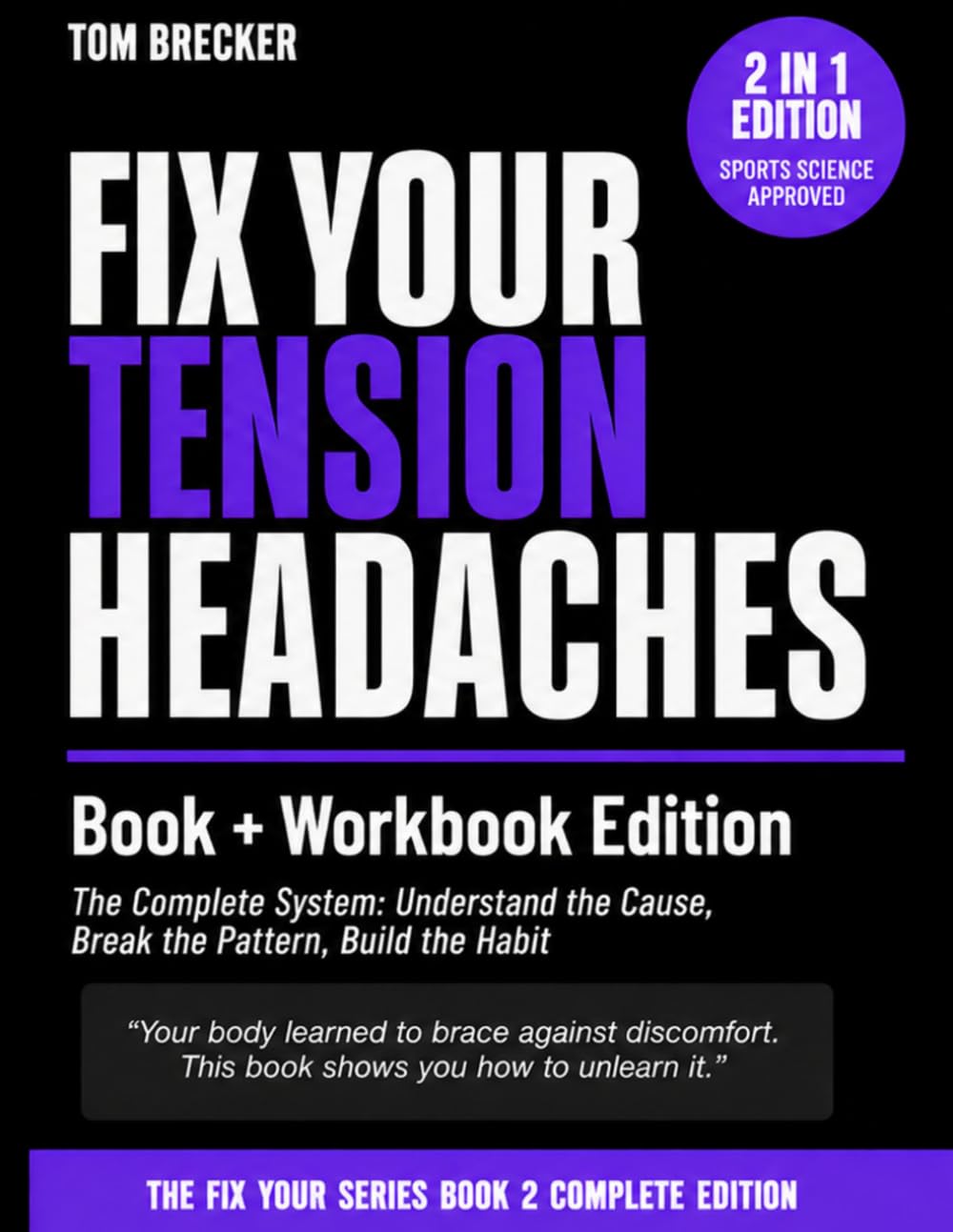
Get the Book + Workbook
Fix Your Tension HeadachesBook + Workbook Edition
A practical guide for understanding common tension patterns and building a more structured approach to managing them.
The Book + Workbook Edition combines the complete guide with practical exercises, reflection tools and a 30-day tracker so readers can identify patterns and track what changes over time.
What's inside
- 116-page Book + Workbook PDF
- Practical exercises and strategies
- Headache profile
- Trigger inventory and pattern map
- Progress assessments
- 30-Day Tracker
- Bad-week reset
- Monthly check-ins
- Clickable chapters
- Evidence-informed references
What you get
- 116-page Book + Workbook PDF
- Printable 30-Day Tracker – US Letter
- Printable 30-Day Tracker – A4
- Instant digital access
Print only what you need
You don't need to print the entire 116-page book.
The included 30-Day Tracker is provided as a separate printer-ready PDF in US Letter and A4.
Print only the pages you need — or use the tracker digitally on a tablet with apps such as GoodNotes or Notability.
No gym. No complicated equipment. No extra hour every day.
A practical system designed to fit into your existing routine.
Explore Related Topics
- Stress & CortisolChronic stress, cortisol and recovery. Practical regulation exercises without the hype.
- Anterior Pelvic TiltPosture, pelvis position and the lower belly. What the tilt is, how to check it, and where to start.
- Pelvic FloorStrength and relaxation, breathing and the core. A calm introduction to the muscles most advice gets half right.
- BlogAll articles by Tom Brecker.
This content is for educational purposes only and is not a substitute for medical advice, diagnosis or treatment. Headaches can have many different causes. Seek medical attention for sudden or severe headaches, new or worsening symptoms, or symptoms such as vision changes, weakness, numbness, confusion or other concerning neurological signs.
Free · 9 guided videos · 7-day plan
Want a simple daily starting point?
Get the free 7-Day Body Reset. Short guided practices for breathing, neck and shoulders and the upper back, with the plan for each day already made.