
Topic guide
Anterior Pelvic Tilt: Exercises, Causes & What Actually Helps
Anterior pelvic tilt is one of the most common reasons a lower belly seems to stick out and a lower back feels tired after long days of sitting. This guide explains what it is, what it is not, and which kinds of practice people tend to find useful.
By Tom Brecker, BSc Sports Science · Educational information, not medical advice
What Is Anterior Pelvic Tilt?
Anterior pelvic tilt means the front of your pelvis sits tipped forward and down, while the back rises. The lower back usually arches more as a result.
Picture the pelvis as a bowl. When it tips forward, as if pouring water out of the front, the lower back curve deepens and the abdominal contents are pushed forward. Some forward tilt is completely normal. In one study of 120 healthy young adults, most men and women had a measurable anterior tilt (Herrington, 2011). Having some tilt is not a diagnosis.
Common Signs of Anterior Pelvic Tilt
The most common signs are visual: a stronger arch in the lower back, a bottom that sits further back, and a lower belly that pushes forward when you stand.
None of these confirm anterior pelvic tilt on their own. They are reasons to look more closely, not conclusions.
- A lower belly that looks bigger standing than lying down
- A noticeable gap behind the lower back when standing against a wall
- A feeling of tiredness or tightness in the lower back after standing
- Front of the hips feeling tight after long periods of sitting
What Causes Anterior Pelvic Tilt?
Usually not a single cause. It tends to be a pattern your body has learned, often through long hours of sitting and how you habitually stand.
The usual suspects are hip flexors that spend most of the day in a shortened position, glutes and deep abdominal muscles that are not doing much of the work, and simple habit. Stress may also play a part for some people, because the deep muscles that link the spine and hips tend to stay more guarded when you are under constant pressure. The evidence on exactly how much each factor contributes is limited.
Anterior Pelvic Tilt Exercises
The exercises most often used combine three things: learning to move the pelvis on purpose, strengthening the glutes and deep core, and easing the front of the hips.
Start with control rather than intensity. A slow pelvic tilt, lying on your back with knees bent, teaches you to feel the difference between an arched and a flattened lower back. Glute bridges and planks build on that. Short, regular practice tends to work better than an occasional long session.
Anterior Pelvic Tilt and Posture
Posture is less about holding one correct position and more about being able to move out of the position you default to.
Forcing your pelvis into a tucked position all day tends not to last. A more useful aim is awareness: noticing when you stand with your weight pushed forward into your lower back, and having the strength and control to shift it. Upper back mobility often helps too, because a stiff upper back can push the arch lower down.
Anterior Pelvic Tilt and Tight Hip Flexors
Tight hip flexors are commonly linked to anterior pelvic tilt, but stretching them alone rarely changes much.
The hip flexors attach to the front of the pelvis and the lower spine, so when they stay short they can pull the pelvis forward. Many people stretch them for months and see the same silhouette in the mirror. Stretching tends to work better alongside glute and core work, so the body has something else to hold the new position with.
Anterior Pelvic Tilt, Core and Glutes
The glutes and deep abdominal muscles help hold the pelvis level, which is why they feature in most approaches.
Crunches mainly train the upper abdominal muscles and do not change pelvic position. Exercises such as glute bridges, dead bugs and planks, done slowly and with attention to keeping the lower back from arching, are more commonly used. A common problem is that other muscles quietly take over the work, which is why slow, controlled practice matters.
Can Anterior Pelvic Tilt Affect the Appearance of the Lower Belly?
Yes, it can. A forward-tilted pelvis can push the lower belly forward and make it look bigger than it is, without any extra body fat.
A simple sign: if the lower belly looks noticeably flatter when you lie on your back than when you stand, position is likely playing a part. Body fat, bloating and changes after pregnancy are also real factors, and many people have a combination.
Frequently Asked Questions
Is anterior pelvic tilt bad?
Not necessarily. Some forward tilt is normal and very common in healthy people. It becomes worth working on when it affects how you feel, move or look in a way that bothers you.
How long does it take to improve anterior pelvic tilt?
It varies a lot from person to person. Some people notice changes in how they stand within a few weeks of consistent practice. Research has not established how reliably exercise changes pelvic position long term.
Can I check for anterior pelvic tilt at home?
You can get a rough idea with a wall check: stand with your heels, bottom and shoulder blades against a wall and notice the gap behind your lower back. It is a home check, not a diagnosis.
Do crunches help anterior pelvic tilt?
Rarely. Crunches mainly train the upper abdominal muscles and do not change pelvic position. Slow glute and deep core work is more commonly used.
Recommended Resources
Articles
- Skinny fat or anterior pelvic tilt? How to tell why your lower belly sticks out7 min read
- Why your lower belly sticks out (even when you are not gaining weight)6 min read
Guided exercises
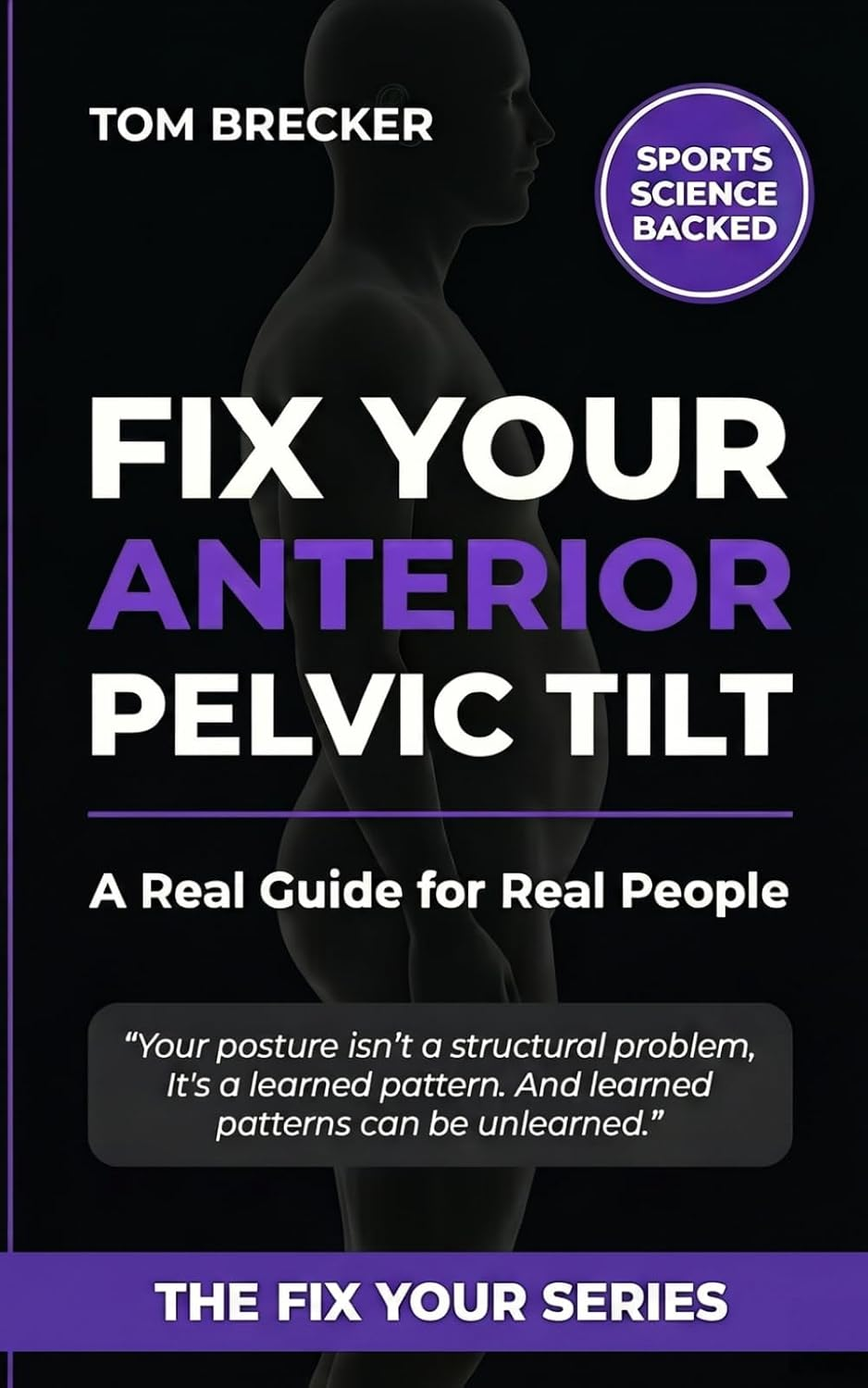
The book
Fix Your Anterior Pelvic Tilt
A practical guide to exploring pelvic position, movement and posture awareness.
Fix Your Anterior Pelvic Tilt on AmazonFree · 9 guided videos · 7-day plan
Want a simple starting point?
Try the free 7-Day Body Reset. It includes guided pelvic tilt, glute bridge and plank practice inside a plan for the week.