
Topic guide
Pelvic Floor: Exercises, Relaxation & What You Should Know
Most pelvic floor advice is about squeezing. For many people the more useful skill is letting go. This guide covers what the pelvic floor does, how exercises and relaxation differ, and how it works together with breathing, posture and the core.
By Tom Brecker, BSc Sports Science · Educational information, not medical advice
What Is the Pelvic Floor?
The pelvic floor is a group of muscles that spans the base of the pelvis like a hammock. It supports the pelvic organs, helps control the bladder and bowel, and works together with your breathing and deep core.
Like any muscle group, it needs to be able to contract and to relax. Problems can come from either side: muscles that do not engage well enough, or muscles that rarely let go.
Pelvic Floor Exercises
Pelvic floor exercises usually involve gently lifting and then fully releasing the pelvic floor muscles, with attention to the release as much as the lift.
Quality matters more than quantity. A gentle lift, held briefly, followed by a complete let-go is more useful than many hard squeezes. Many people hold their breath or clench their glutes while trying, which is worth noticing.
Pelvic Floor Relaxation
Pelvic floor relaxation means learning to release these muscles fully. Some people carry constant low-level tension there without noticing.
Slow breathing is one of the simplest tools, because the pelvic floor moves with the diaphragm: it tends to descend slightly as you breathe in and lift as you breathe out. Positions that open the hips, such as a butterfly stretch, are often used to make the release easier to feel.
Common Pelvic Floor Questions
The most common questions are about whether to strengthen or relax, and when to get help.
If you have pain, leaking, a feeling of heaviness or any sudden change, a pelvic health physiotherapist is the right person to see. Self-guided exercises are educational and are not a replacement for an assessment.
Pelvic Floor and Posture
How you stand can change how your pelvic floor is loaded, because it sits at the base of the pelvis.
A strongly tilted pelvis, or habitually sucking the belly in, may change how the pelvic floor and deep abdominal muscles share the work. The research here is still developing, so it is best seen as one factor among several.
Pelvic Floor and Core Function
The pelvic floor is the base of the deep core, working together with the diaphragm, the deep abdominal muscles and the small muscles of the spine.
That is why breathing, posture and pelvic floor work tend to be practised together. Training one part in isolation, for example only hard squeezes, can miss how the system is meant to coordinate.
Frequently Asked Questions
Should I strengthen or relax my pelvic floor?
It depends on the person. Some people benefit most from strengthening, others from learning to release. Being able to do both is the goal. A pelvic health physiotherapist can assess which applies to you.
How do I know if I am doing a pelvic floor exercise correctly?
A gentle lifting sensation without holding your breath, clenching your glutes or pushing your belly out is a good sign. If you are unsure, a pelvic health physiotherapist can check.
Can breathing help the pelvic floor?
Breathing and the pelvic floor move together, so slow, relaxed breathing is often used as part of pelvic floor relaxation.
When should I see a professional?
If you have pain, leaking, heaviness, or symptoms that are new or getting worse, see a physician or pelvic health physiotherapist.
Recommended Resources
Guided exercises
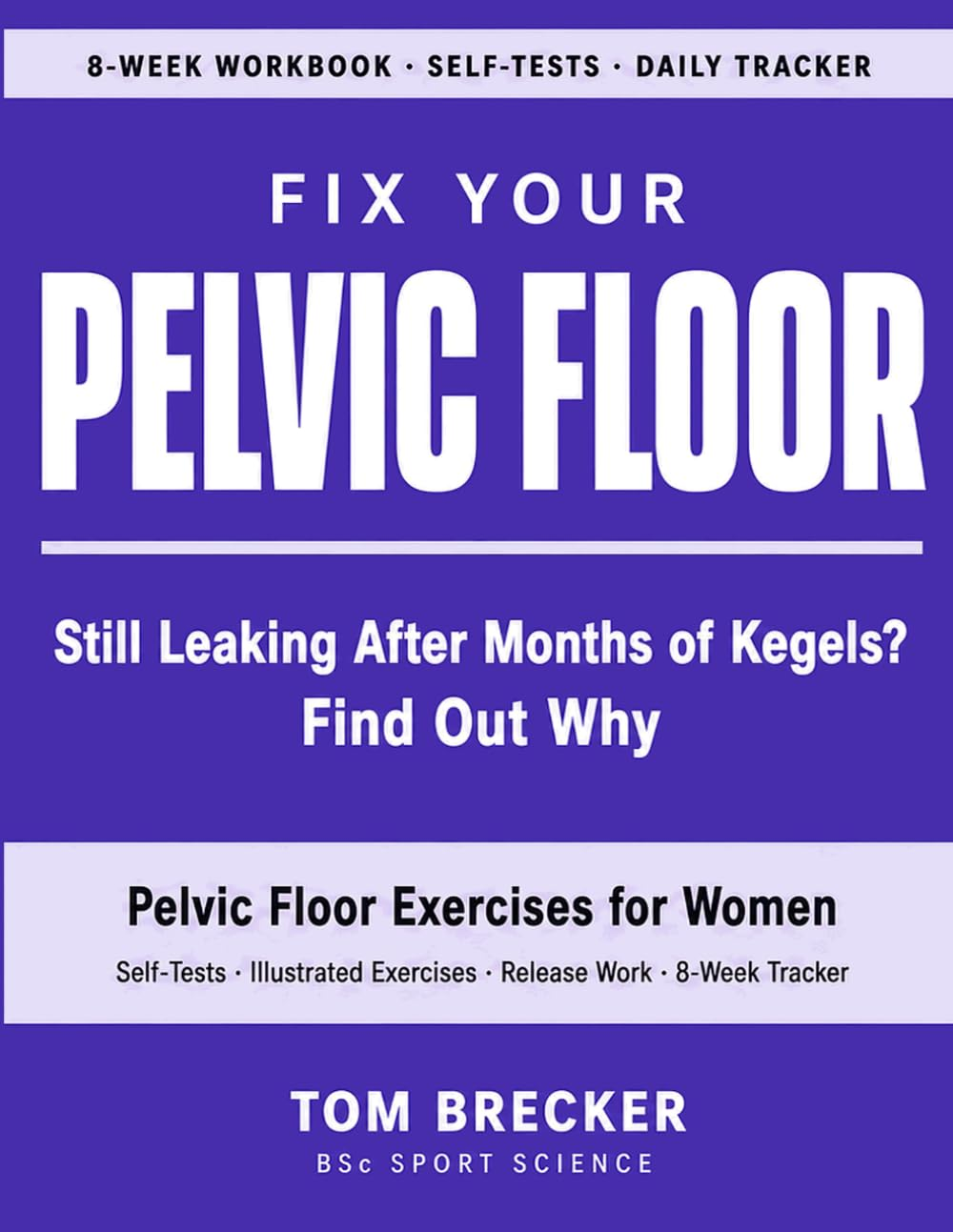
The book
Fix Your Pelvic Floor
Self-tests, illustrated exercises, release work and an eight-week tracker.
Fix Your Pelvic Floor on AmazonFree · 9 guided videos · 7-day plan
Start with the free Pelvic Floor Reset
The free 7-Day Body Reset includes guided pelvic floor and butterfly release practice, with a short plan for each day.