
Still Leaking After Kegels? 5 Reasons Pelvic Floor Exercises Stop Working
13 October 2026 · 8 min read · Tom Brecker, BSc Sports Science
Last updated: October 2026
You did everything right. You downloaded the app, you squeezed at red lights, you did your sets before bed. And you still leak when you sneeze, still need to go the moment you see a bathroom, still wear dark leggings to the gym just in case.
That does not mean your body is broken. It usually means one of five things is getting in the way, and most of them have nothing to do with how hard you try.
Quick answer: Kegels stop working when they are done incorrectly, when the pelvic floor is too tight rather than too weak, when contractions are never fully released, when leaks are a timing problem, or when daily bladder habits keep training urgency. Each one needs a different fix.
Reason 1: You May Be Pushing Down Instead of Lifting
This is the most common error, and you can do it for months without knowing. In a well known study, about half of women given clear verbal instructions could not perform a correct pelvic floor contraction, and roughly a quarter pushed down instead of lifting (Bump et al., 1991).
Pushing down loads the floor instead of lifting it. It is the opposite of the exercise.
How to check: lie on your back with one hand on your lower belly. Imagine stopping gas and gently drawing a marble up and inward. A correct lift feels like a small upward and inward squeeze while your belly, glutes and thighs stay soft and you keep breathing. If your belly bulges or you feel pressure downward, stop and start again with much less effort.
Watch a guided pelvic floor lift →
Reason 2: Your Pelvic Floor Is Too Tight, Not Too Weak
Most programs assume every leaking pelvic floor is weak. Many are. But a large group of women have the opposite problem: a floor that is clenched all day. A muscle that never switches off has no range left to respond when you cough, so it leaks anyway.
Squeezing a floor like that makes it shorter and more tired. That is why some women feel worse after weeks of diligent Kegels.
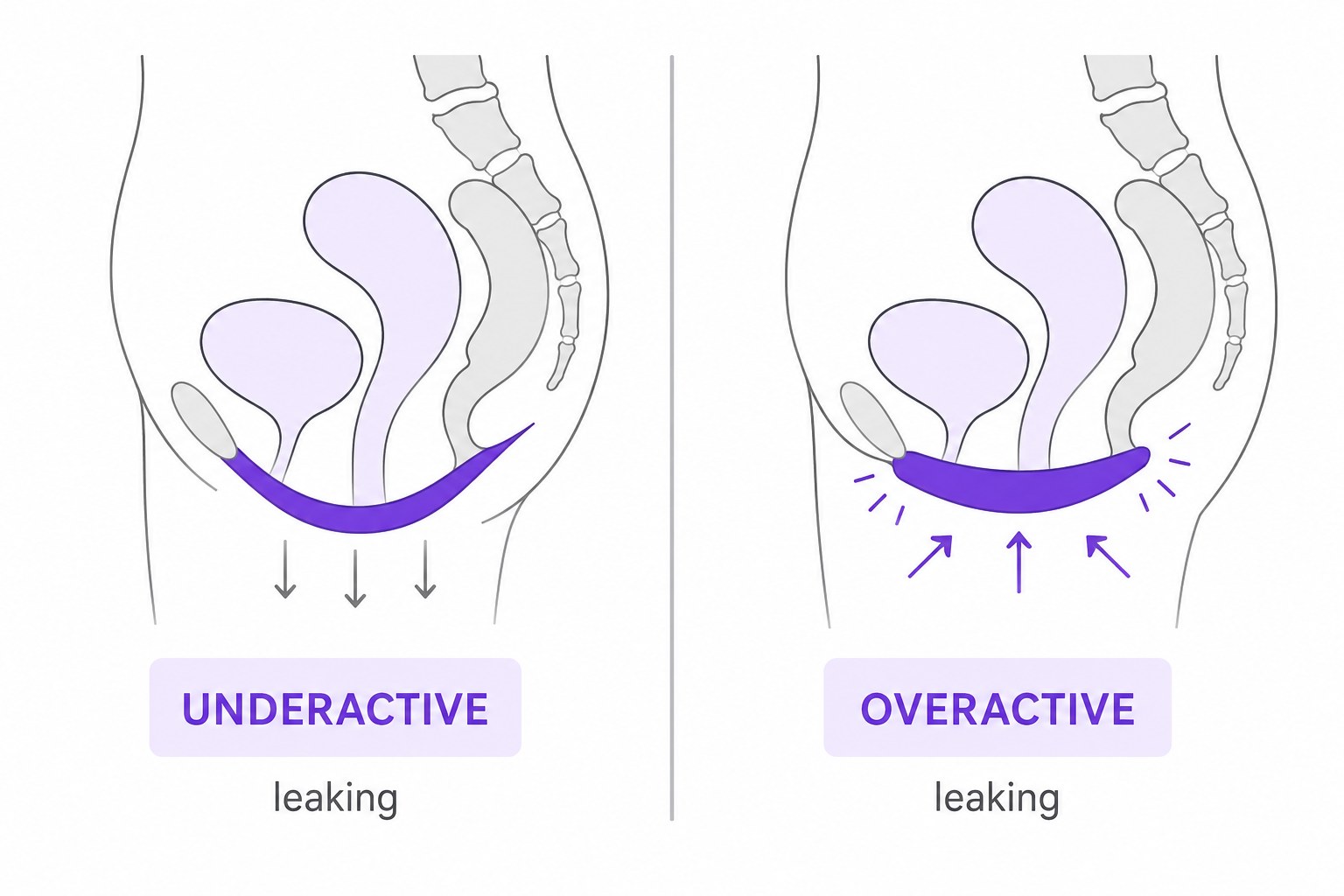
Signs your floor may be too tight: urgency and frequent bathroom trips, pelvic or tailbone pain, pain with sex or tampons, a slow stream, and no progress despite consistent Kegels. If that sounds like you, read the full comparison in the guide:
Weak or tight? The complete pelvic floor guide →
Reason 3: You Never Fully Let Go
A contraction you cannot release is not strength. It is tension. Many women squeeze, hold, and then only half relax before the next rep, so the floor slowly ratchets up over a set.
The fix is simple and almost nobody teaches it: every lift ends with a full release that lasts longer than the hold. A good starting ratio is three seconds up, six seconds fully soft. Slow breathing helps, because the pelvic floor moves with your diaphragm. On each inhale it should widen and drop a little.
Try a guided breathing practice →
Butterfly release for the hips and pelvic floor →
Reason 4: Your Leaks Are a Timing Problem
Nobody leaks lying on a mat. You leak when you sneeze, laugh, lift a toddler or stand up from a chair. Those moments are about timing: the floor has to lift a split second before the pressure arrives.
There is a well established technique for exactly this, called the Knack. You lift your pelvic floor just before the cough, the sneeze or the lift, hold through it, and then let go. Timing is a skill, so it often improves faster than strength once you practice it on purpose in real life, not only on the mat.
Reason 5: Your Daily Habits Keep Training the Problem
A few minutes of exercise cannot outwork sixteen hours of habits. These are the ones that quietly keep urgency and leaking alive:
- Going to the bathroom just in case, which teaches your bladder to call early
- Drinking less to avoid leaks, which makes urine more concentrated and irritates the bladder
- Hovering over public toilet seats instead of sitting down fully
- Straining on the toilet instead of breathing out
- Holding your breath every time you lift something
- Clenching your jaw, shoulders and glutes when you are stressed
That last one matters more than it looks. The pelvic floor tends to grip along with the rest of your body under stress. If you recognize that pattern, this article on why stress keeps your body switched on is worth reading:
Tired but wired: why you cannot rest →
When It Is Not a Training Problem
Some symptoms need an examination, not a better routine. See a pelvic floor physical therapist if you have pelvic pain or painful sex, a bulging or dragging sensation, leaking of stool, symptoms that are getting worse, or no change after eight weeks of consistent, correct work. Get urgent care for blood in your urine or stool, fever, or a sudden loss of bladder control.
Posture can play a role too. A strongly tilted pelvis and a breath that lives high in the chest change how much pressure reaches the floor.
What to Do Next
If one of these five reasons hit home, you are not doing too little. You are doing the wrong version, in the wrong order. The fix is not more effort. It is a plan that starts with finding out which pelvic floor you actually have, then trains it in the right sequence: release where needed, a correct lift, timing for the moments that matter, and habits that stop working against you.
That is exactly how the workbook is built.
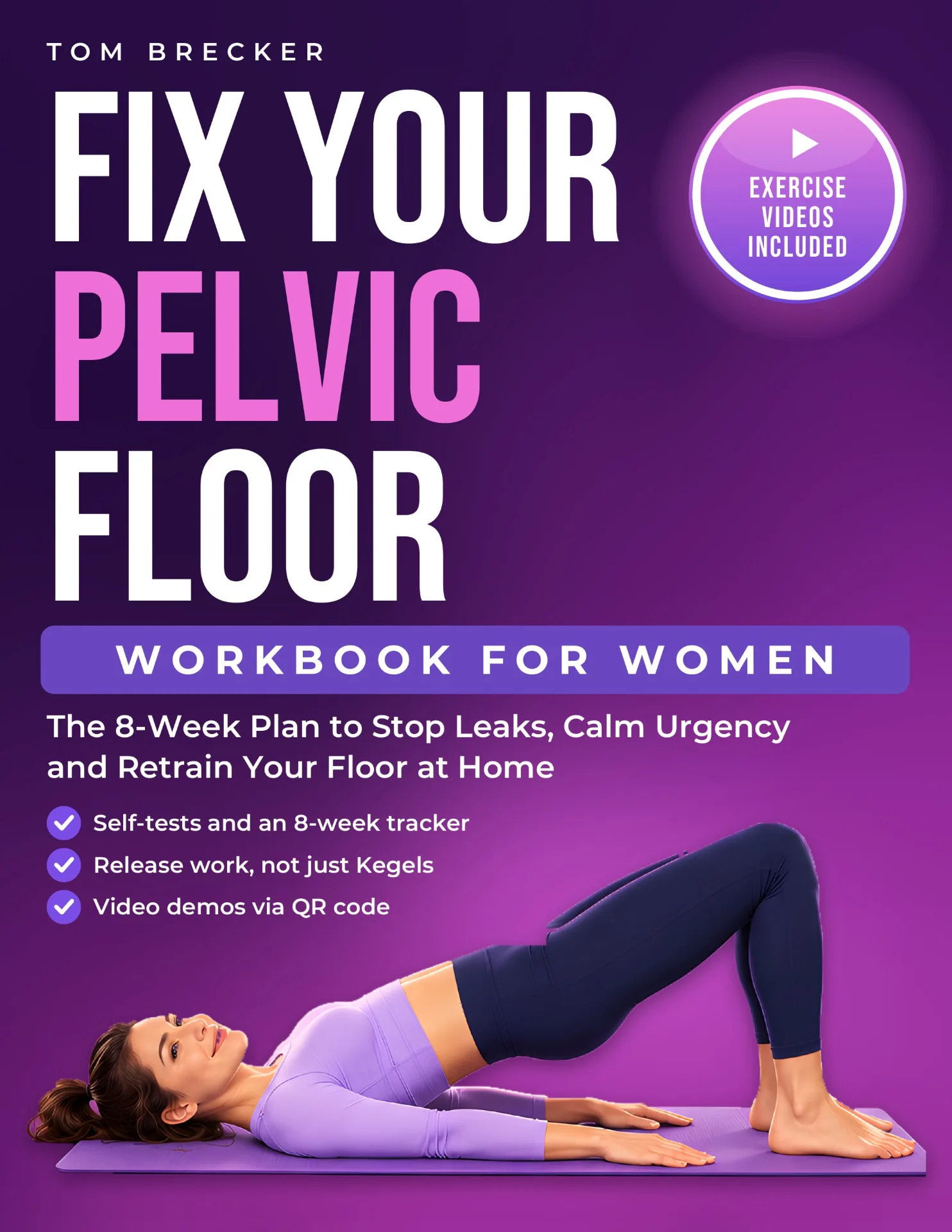
Fix Your Pelvic Floor Workbook for Women
The 8-week plan to stop leaks, calm urgency and retrain your floor at home.
$16.99, instant download
- 4 self-tests and the Release Gate: strength first or release first
- Video demos for the key exercises
- 3 illustrated levels for every exercise
- The Knack, bladder and bowel logs and 5 daily micro habits
- Printable 8-week tracker in US Letter and A4
- Bonus: exercise poster with all 15 movements
Get the workbook: instant PDF downloadPrefer the paperback? Get it on Amazon
Frequently Asked Questions
Why am I still leaking after doing Kegels?
The most common reasons are pushing down instead of lifting, a pelvic floor that is too tight rather than too weak, not releasing fully between reps, leaks that are a timing problem, and bladder habits that keep urgency going.
Can Kegels make leaking worse?
Yes, if your pelvic floor is already tight. Extra squeezing can increase tension, urgency and discomfort. Checking which type you have comes first.
How long should Kegels take to work?
Many women notice better control and timing within a few weeks. Real strength changes are usually judged over about three months of consistent, correct training.
How do I know if my pelvic floor is too tight?
Typical signs are urgency, frequent bathroom trips, pelvic or tailbone pain, pain with sex or tampons, a slow stream and no progress with Kegels. A pelvic floor physical therapist can confirm it with an examination.
What is the Knack?
The Knack is a technique where you lift your pelvic floor just before a cough, sneeze, laugh or lift, hold it through the pressure and then release. It targets the timing that many leaks depend on.
Should I stop doing Kegels?
Not necessarily. Make sure you are lifting correctly, always release fully, and if you have signs of a tight floor, start with release and breathing work before adding strength.
Related
Part of the Pelvic Floor guide. Read the complete guide to pelvic floor
Free · Seven days · Five minutes a day
Start with day one
Twelve questions, one number, and the Recovery Window. A starting point you can measure against in four weeks.